

Uncategorized
A guide to damaged banknotes: What we can and cannot accep/
Fake-50-pounds-banknotes in germany online
What we can and cannot accept
At Leftover Currency, we help customers exchange their foreign notes and coins for sterling. As part of our process, we handle banknotes in all sorts of conditions every day.fake-50-pounds-banknotes in germany online
Antiques& Collectibles
Some notes are damaged and cannot be processed in the normal way. In this guide, we explain what damaged banknotes are, how we assess them, and why some cannot be exchanged with us.
What is considered a damaged banknote?
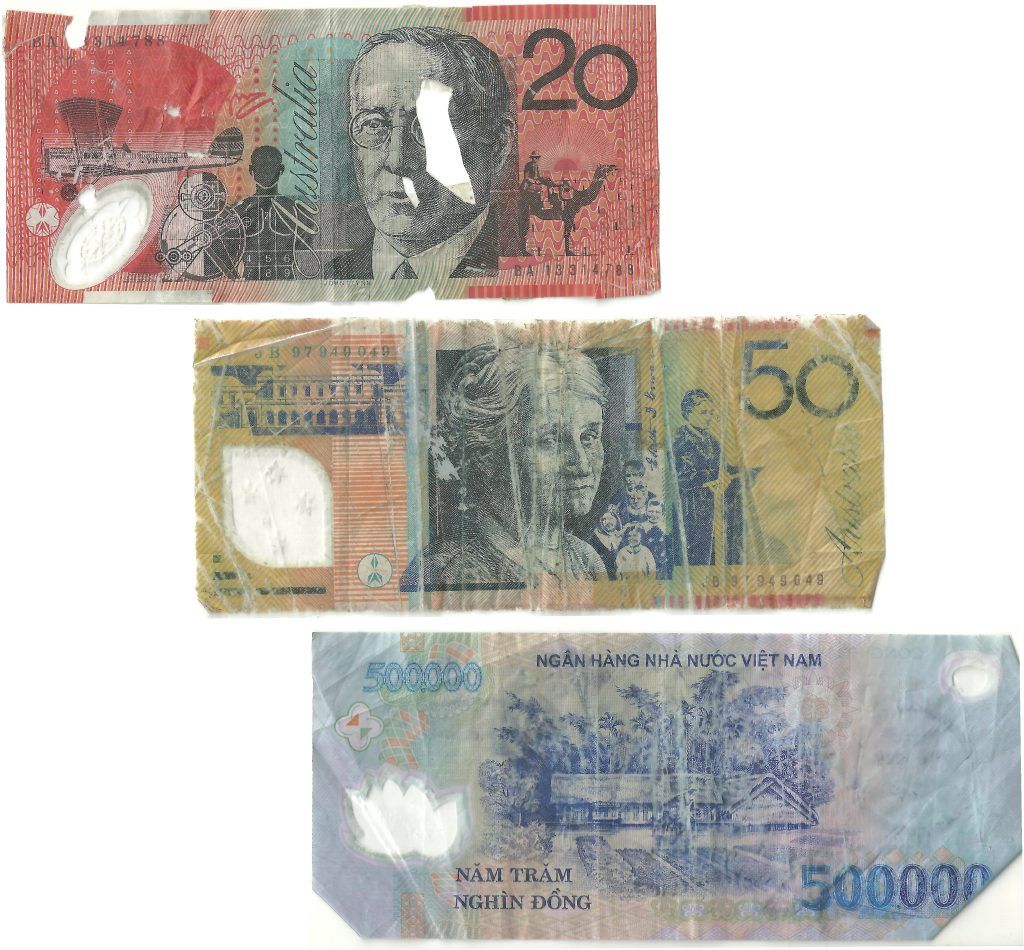
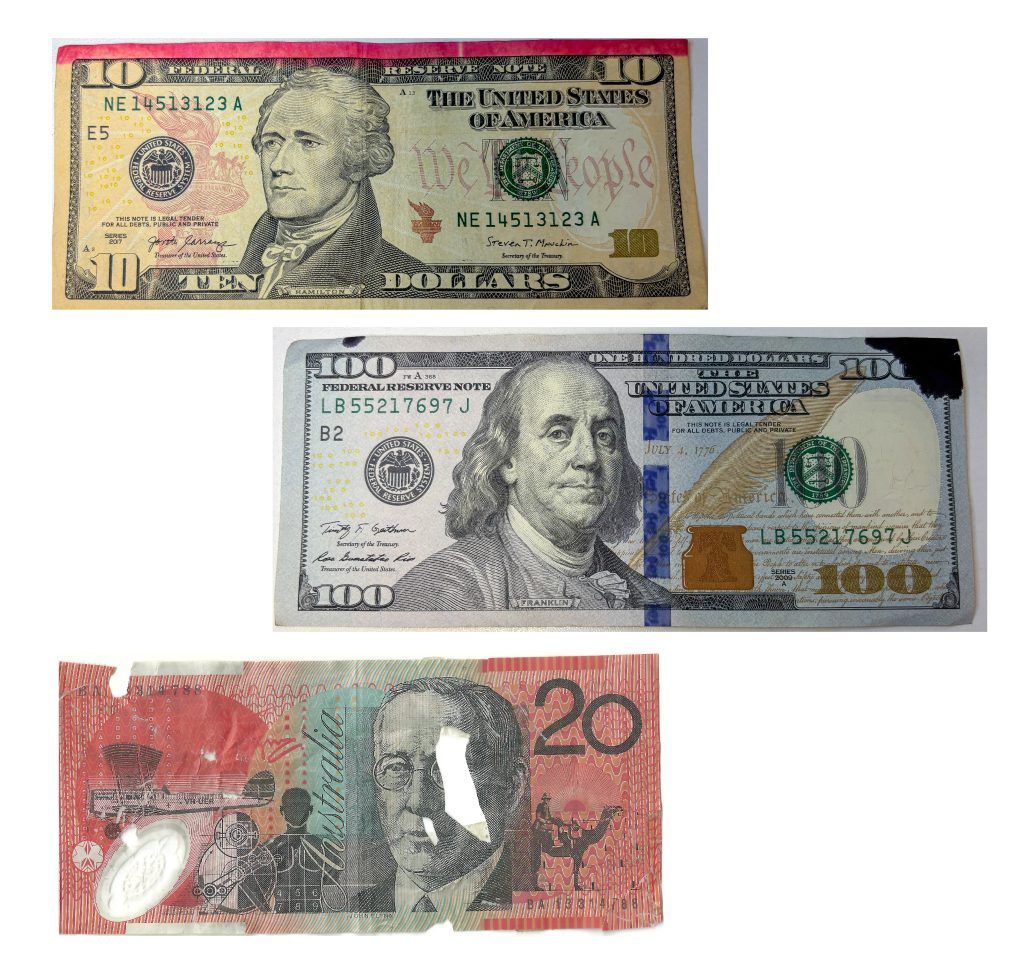
A damaged banknote is any note that has been changed, marked, torn, stained, or worn to the point that it is no longer in good condition. In some cases, the damage is only cosmetic. In others, it can affect whether the note can be accepted for exchange.
Banks, exchange services, and cash handlers usually check the condition of every note to ensure that the note is genuine, complete, and still suitable for circulation or deposit. If a note is too badly damaged, it may be rejected.
Damaged banknotes can appear in many forms. Some of the most common examples include:
Tears and rips
A note with small tears may still be recognisable, but larger rips in notes cannot be accepted.
Holes
Holes in a banknote can range from small punctures to larger missing sections. Even if the rest of the note looks fine, missing pieces can affect whether it is accepted.
Heavy wear and tear
Banknotes that have been used for a long time often become very soft, faded, creased, dirty, or worn around the edges. General wear is normal, but severe wear where you cannot see the design of the note anymore makes it unfit for exchange.
Ink stains or discolouration
Some notes become stained by ink, water, oil, food, or other substances. Heavy staining can make security features harder to check and may raise concerns about the condition of the note.
Ink stains can sometimes show that a banknote has been marked by a security device, such as a dye pack used during a theft. As these notes may be connected to criminal activity, we cannot accept banknotes with this kind of staining.
Writing, markings, or scribbles
Notes with pen marks, written messages, stamps, or other markings are often treated as damaged. Even small amounts of writing can reduce the quality of the note.
Water or heat damage
Notes that have been soaked, washed, burnt, melted, or exposed to heat can become weak, shrunk, stuck together, or badly distorted. These notes cannot be processed.
Can I exchange damaged banknotes with Leftover Currency?
No, Leftover Currency does not accept damaged banknotes for exchange.
Antiques& Collectibles
We are only able to accept banknotes that are in a suitable condition for processing. Our team reviews each submission before it moves through the next stage, and we can only handle notes that meet our condition requirements.
To keep our service safe and efficient, we only accept banknotes that are in good, exchangeable condition. If you are not sure whether your notes are suitable, please contact our team, and we will be happy to help.
What counts as a good condition for banknotes?
A banknote is usually considered to be in good condition when it is:
- Clean, complete, and easy to identify. It should still look like a normal note and show no major signs of damage.
- In most cases, a note in good condition should not have tears, holes, missing pieces, heavy creasing, stains, writing, or tape. It should also be free from serious wear and tear that could affect handling or inspection.
- A good quality banknote should still have its main design clearly visible. Important features, such as printed details and security elements, should remain intact and easy to check.
- Notes that are only lightly used may still be acceptable, as long as they are not badly marked or damaged. If a banknote looks heavily worn, altered, or incomplete, it is less likely to be accepted.
Ready to exchange your currency?
Got leftover coins or banknotes at home? Before sending them to us, please check that they are in good condition and suitable for processing.
Antiques& Collectibles
If you are not sure what you have, contact our team, and we’ll be happy to help.

How to Spot Fake Money
Understanding how to spot fake money is an important skill for anyone who handles cash. In addition to supporting crime, failing to spot fake notes could have a serious impact on your business.
At any one time, there are around 3.7 billion banknotes in circulation, with a face value of around £70 billion. Of these, less than 0.05% are fake notes. In 2017, £10 million worth of fakes notes were removed from circulation. So while they may not be common, fake notes are common enough to affect the bottom line of the average business.
The vast majority of counterfeits are discovered before they go back into circulation, when retailers and the banking system are sorting them. Fake notes are typically removed from circulation quickly, often after a single use. Here are a few tips on how to spot fake money when you’re handling cash.
When should you check for fake notes?
In order to protect your business, it’s best to check notes as soon as you receive them, before giving over the goods you’re selling. Don’t worry about offending your customer, checking a note doesn’t take long and will protect your business in the long run. It’s especially important to be vigilant in situations where you’re busy or you cannot see the notes clearly, such as a busy bar or club.
How to spot fake £5 notes
New £5 are made from polymer, rather than paper. Their new design is packed full of security features that help fight against forgeries. Here’s how you can spot a fake £5 note:
- Check the polymer and print. By running a finger across the front of the note, you should feel raised print across the words “Bank of England”. Microlettering on the note should spell out the value of the note in words and numbers.
- Check the print quality. The lines and colours need to be sharp and clean. Any blurring or smudges in the print could indicate a fake $5 note.
- On the front of the note, at the top, you’ll find a silver foil patch. An image of the coronation crown should appear in 3D on the foil. When tilted to catch the light, make sure you can see a rainbow effect. Another silver patch can be found at the bottom of the note. When tilted, you should see the word “Five” change to “Pounds”.
- New £5 notes have a see-through window. You should be able to clearly see the Queen on the front and the words “£5 Bank of England” printed twice around the edge. Over the window you should see a gold image of the Elizabeth Tower on the front. On the back, it should be silver. Again, when tilted, you should see the rainbow effect.
- On the back of the note, you should find a green patch. Letters inside the patch spell BLENHEIM.
- Using a high quality UV detector, you should see a number 5 appear in bright red and green.
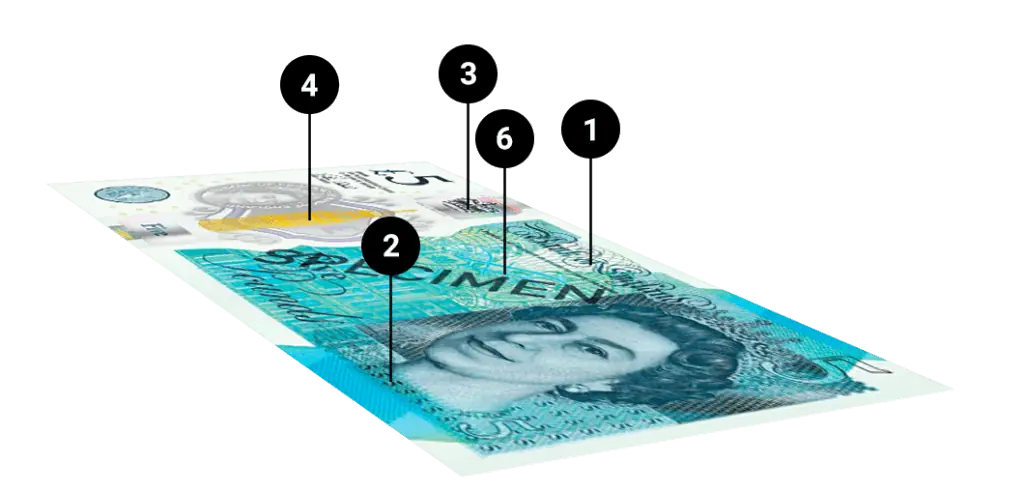
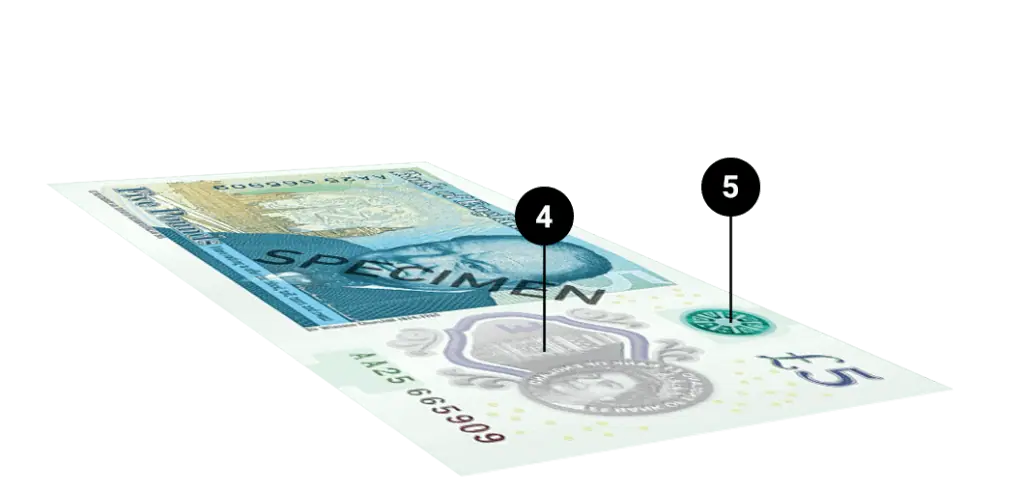
You can spot a fake £5 note if it is missing one of these security features, or the quality seems lower than other notes.
german-passport
portugal-passport
malaysia-passport
swiss-passport-online
norway-passport
uk-passport
sweden-passport
denmark-passport
canadian-passport
france-passport
irish-passport
fake-new-zealand-
fake-malaysia-ringgit-
fake-rm-100-banknotes
20-ringgit-malaysia-
fake-rm-10-banknotes
50-ringgit-malaysia-
99-99-pure-red-liquid-
silver-liquid-mercury
ssd-chemical-solution
activation-powder/
caluanie-muelear-
canadian-10-dollars
fake-50-cad-money
fake-50-pounds-
fake-pounds-banknotes
fake-20-canadian-
fake-5-cad-money
fake-pounds-banknotes
fake-50-pounds-
fake-20-canadian-
fake-100-cad-
fake-5-cad-money
fake-50-euro-
fake-5-euro-banknotes
200-euro-banknotes/
20-euro-banknotes
100-euro-banknotes
10-euro-banknotes
aud-100-bills
australian-50-dollar-
50-dollar-banknotes
usd-5-dollar-
usd-20-dollar-
fake-100-dollar-
fake-usd-10-banknotes
fake-usd-banknotes
fake-euro-banknotes
aud-10-bills
How to spot fake £10 notes
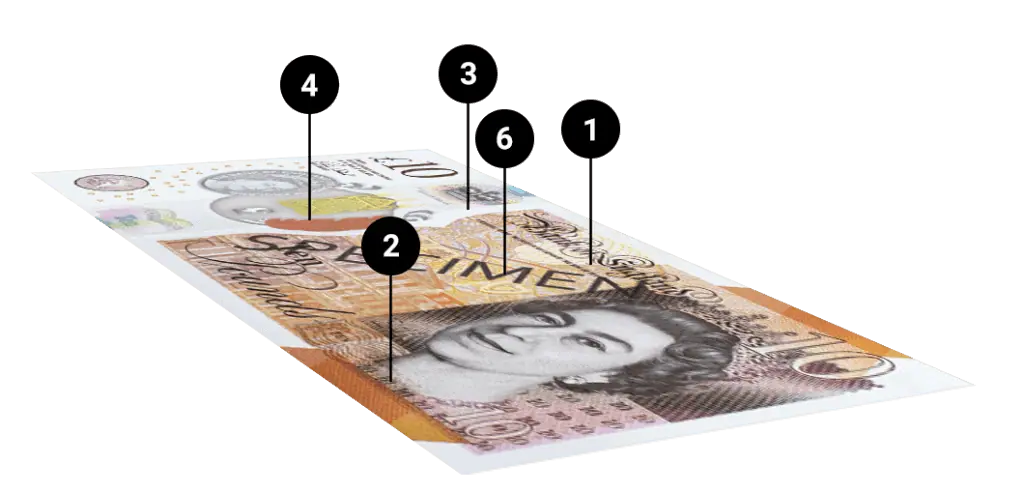
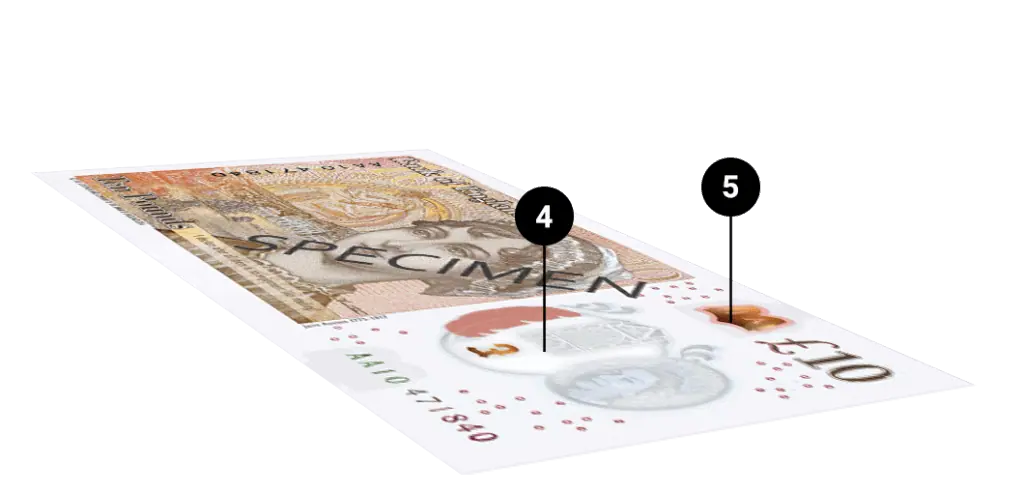
The new £10 is also made form polymer and features many of the same features as the new £5, including raised lettering, foil patches and a UV feature. The new £10 also has a few unique features. To spot a fake £10 note, be sure to check the following:
- Check the polymer and print. Again, you should be able to run a finger across the front of the note and feel the raised “Bank of England” words. New £10 notes also feature raised dots in the top corner. These serve double-duty as an aid for the blind and as an additional security feature. The microlettering on the note should spell out the value of the note in words and numbers.
- Check the print quality. If the lines are blurry or the colour has run, you’re likely in possession of a fake £10 note.
- The foil patches should be the same as the fiver, but the words “Ten” and “Pounds” replace the “Five/Pounds” for obvious reasons.
- The see-through window should have a picture of the queen on the front and the words £10 Bank of England. Rather than the Elizabeth Tower, the new £10 note has an image of Winchester Cathedral on it, featuring its famous broken stained glass window. Beneath the Cathedral should be a £ symbol, which is silver on the front and copper on the back. Next to the window, genuine £10 notes feature a quill, which changes colour from purple to orange when tilted.
- On the back of the £10 note is a book-shaped foil patch. This copper coloured patch has the letters JA printed on it.
- Using a high quality UV detector, you should see a number 10 appear in bright red and green.
How to spot fake £20 notes
In 2020, the Bank of England will issue polymer £20 notes. Until then, we are still using the paper note. Known as the “Adam Smith £20 note”, this is the most commonly forged UK banknote. As such, these are the most important notes to check when looking for fakes.
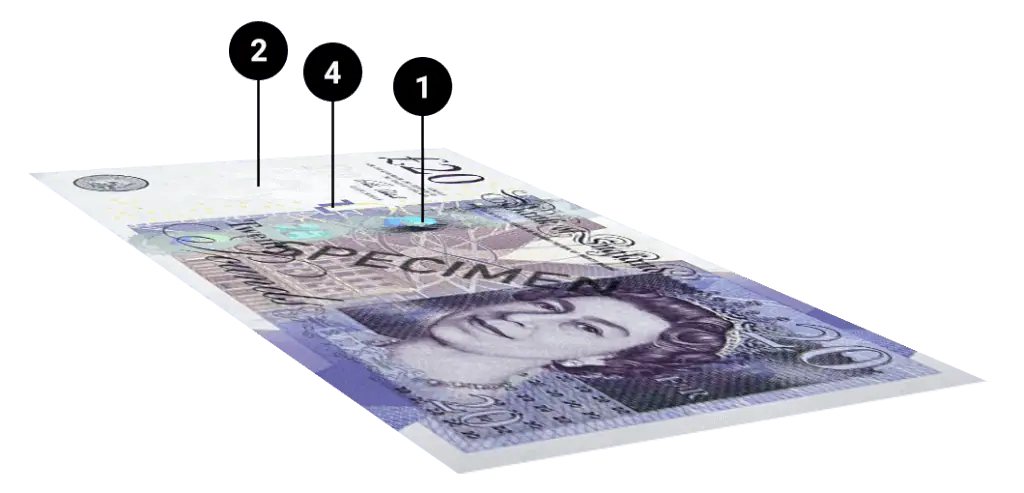
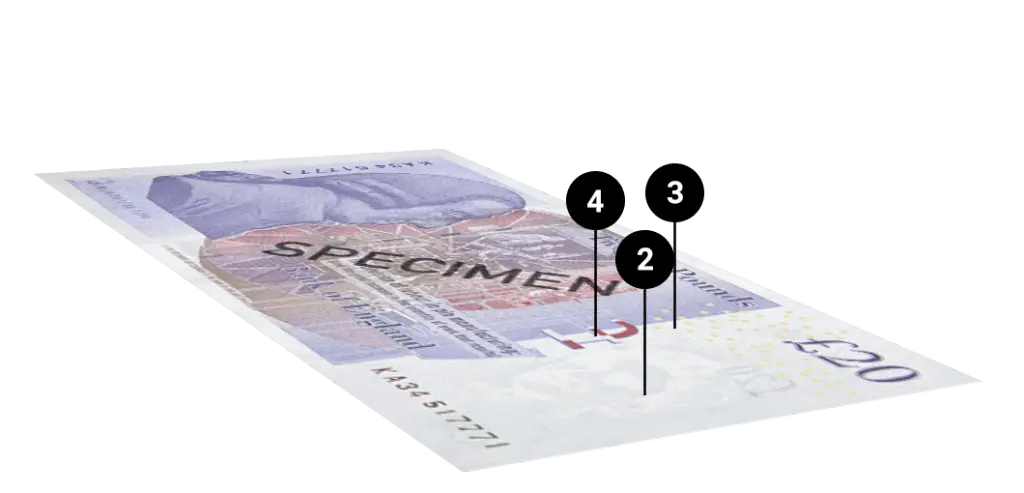
In addition to checking the quality of the paper and the print, there are two quick and easy ways to check for fake £20 notes. Firstly, tilt the note from side to side. The hologram on the front should change from a £ symbol to a 20. Secondly, check the watermark by holding the note up to the light. Next to the Queen’s portrait, you should see a bright “£20”. Fake £20 may have a watermark, but it is often dull in contrast.
£20 notes also include a variety of more sophisticated security measures. These include multicoloured foil image of Adam Smith, raised print, UV “20” like the £10 and £5 notes and microlettering. £20 notes also feature a metallic thread. By holding the £20 note up to the light, you should see a £ symbol appear within the contrasting colours.
How to spot fake £50 notes
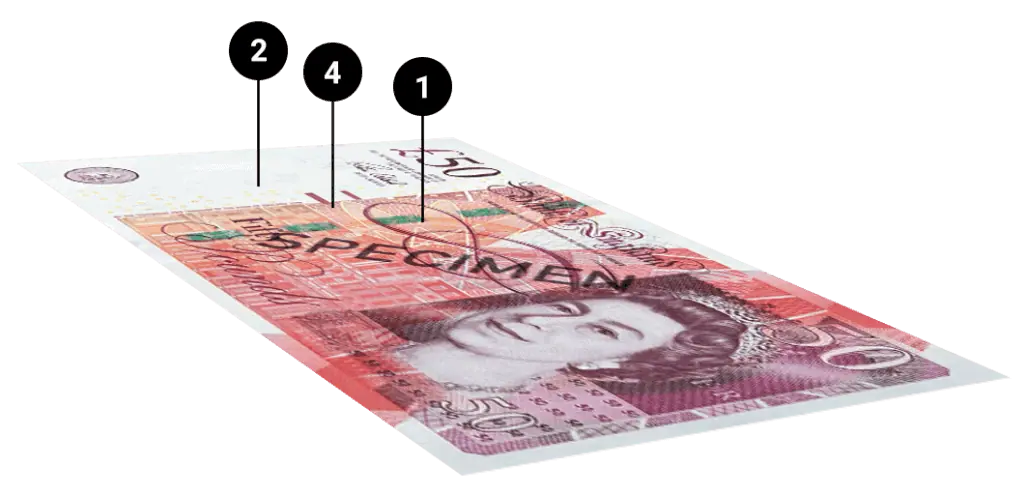
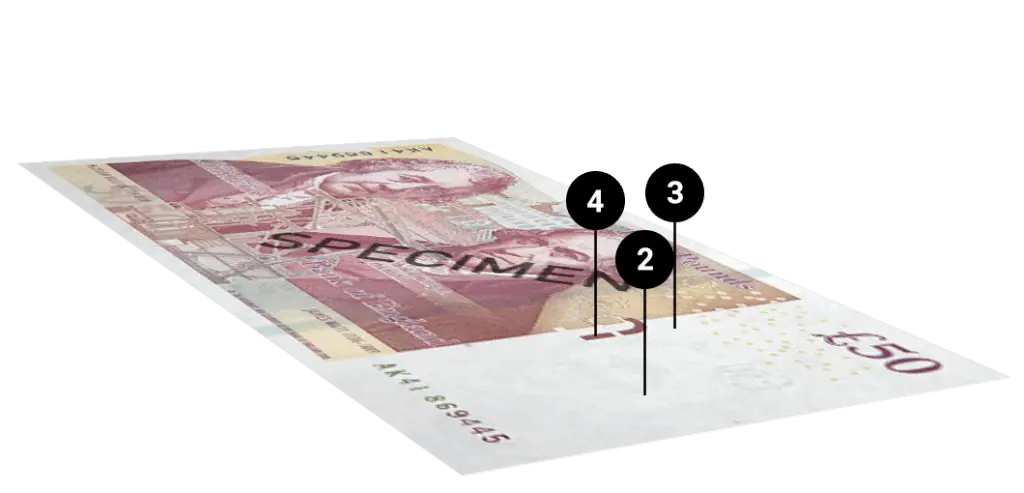
£50 notes are more common than people think, especially in pubs and wholesalers. We don’t know when a polymer £50 note will be released, so in the meantime we have the paper £50 note. The £50 has the same security features as the £20 paper note. where to buy fake-50-pounds-banknotes in germany online
When checking for fake £50 notes, check the quality of the paper and the ink. You’re looking for clean lines, no blurring and raised letters. Holding the note up to the light should reveal a bright “£50” watermark. The hologram, known as the motion thread, should flip between “£” and “50”.
What to do if you discover a fake banknote
It’s a criminal offence to knowingly hold onto or pass on counterfeit notes. So, if you spot a fake note, take it to the police as soon as possible. If the police don’t need it to support a criminal investigation, you can hand it in at your local bank for reimbursement.
Other ways to spot fake notes
In addition to checking the notes themselves, there are other ways to spot fake money. Be extra vigilant if the item being bought is far cheaper than the notes the customer hands over. Spending a £20 note on a purchase that only costs a few pounds is one of the ways criminals can make money from their counterfeit notes.
Bars and clubs are prime targets for circulating fake notes. They are often busy and poorly lit, so criminals take advantage of this to slip fake notes past staff too busy to check. Having a UV detector at every payment device will help you spot more fake notes.
The best way to spot a fake note is to use the latest banknote counters and counterfeit detection technology. order fake-50-pounds-banknotes in germany online
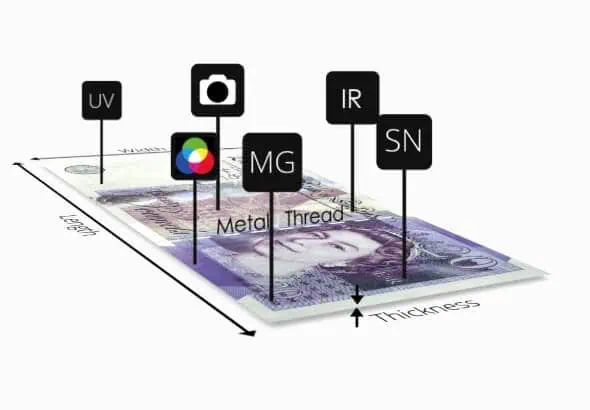
ZZap banknote counters automatically verify your notes so you don’t have to worry about it. No manual checking means no time wasted and no customer confrontations. If a counterfeit is detected our banknote counters automatically reject the banknote without even stopping counting. After counting, our note counters can report the reason why each banknote was rejected.
Security features are incorporated into every currency to prevent counterfeiting. Our banknote counters check a variety of security features on each banknote using the following advanced detections:Buy fake-50-pounds-banknotes in germany online
- Ultraviolet
- Magnetic
- Half-note
- Width
- Thickness
- 3D
- Infrared
- Metal thread
- Serial number
- CIS
Automatic, effortless and seamless, today’s banknote counters and counterfeit detectors are able to identify fake money instantly, saving your business time and money. Check out our range today.
The new £20 polymer banknote and how it will affect your business
The history of the £20 note
The £20 note is Britain’s most commonly circulating note, which is perhaps why it’s the most commonly forged note in the UK. There are double the amount of £20 notes in circulation compared to £10 notes – two billion of them to be exact! This is even more than the number of £5 notes (396 million) and £50 notes (344 million). Did you know the first £20 notes were introduced by the Bank of England for the very first time in 1725? The earliest notes were hand written and issued to individuals as and when needed. Indeed, we have come a long way in terms of both note production and security since then.
Tell me about the new £20 note

Why Polymer?
Polymer notes are the way forward, typically lasting longer than paper notes and also remaining in a better condition. According to the Bank of England, polymer notes have three key features which prove this – they are cleaner, safer and stronger. Because they last longer, they are also more environmentally friendly and have a lower carbon footprint. The waste from old polymer notes can even transformed into new plastic items.
How will this affect my business?
Long term, this will be a very positive step for British businesses, eliminating the chance of accepting counterfeit notes. But don’t worry if you are yet to prepare – ZZap works with the Bank of England to make sure its machines are up to date ready to count and check the new £20 note so you don’t have to. In fact, most of the machines we currently supply already have the latest software installed. If you have previously purchased a product, head to our website to download our free software update, complete with installation instructions. Essentially, you will be able to use your banknote counter to sort £20 notes with the same maximum security and confidence as long as your machine has the latest software.
Once the new polymer note is issued by the Bank of England, the current paper version will still be able to be used until it’s withdrawn from circulation. This withdrawal date will be announced once the new note is issued, giving at least six months’ notice. However, many banks and, in some cases, The Post Office may still accept withdrawn notes.
How to ZZap banknote counters work and how do I choose the right one for me
Your note counter should be about having peace of mind and streamline your cash handling process, which is why ZZap cash counters, are designed for one main purpose – reliability. While also saving you time and money, our banknote counters eliminate human error and fake notes.

Our counterfeit detection works by sensors, which check to see if a note’s built-in security features are present as it passes through the machine. Our high-end note counter, the ZZap NC40, will check for the most advanced security features like infrared and metal threat. 
Before deciding on a machine, it’s important to compare our many different devices to ensure you choose the best one for your individual business needs. Unlike our competitors, we retail bespoke products that are designed to our exact requirements. We only sell the best (premium) quality products which are designed to last and make your life easier.
